
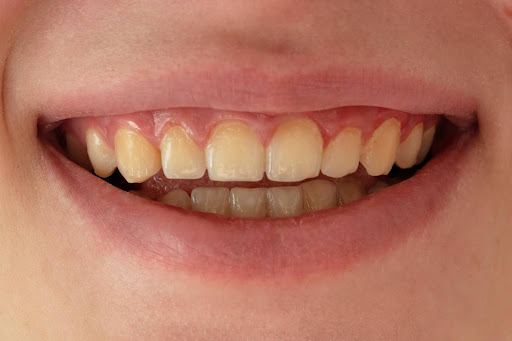
In most cases, either external discoloration due to stains on the tooth enamel or increased exposure of the inner layer of the tooth to light (because the enamel gets thinner with time and age) will cause your teeth to turn yellow. Common reasons for yellowing include coffee and tea stains, red wine and smoking, certain medications, as well as age. In some cases, a professional dental cleaning and changing your lifestyle may do the trick. Others require consultation with your dentist Brighton to determine the actual reason and solution.
If you have noticed that your smile turned yellow in photos, but cannot remember when exactly it happened, it is not your imagination at work. Yellow teeth are one of the most frequently discussed issues among our patients – together with sensitivity and bad breath. The difficulty is that “yellow teeth” is not a problem itself. It is a sign of something else, and that something is not always the same thing in different people. This is when you need a proper diagnosis and treatment.
What Actually Makes Teeth Look Yellow?
Your teeth have two main layers. On the outside is enamel, which is naturally a bit translucent and whitish. Underneath the enamel layer lies the dentine, which is naturally yellow in colour. So, even the best-maintained teeth have that little hint of yellow in their colour, due to biology.
The issue arises when there is some imbalance between these two layers or when some substance is deposited above the enamel. Generally, there are two types: the first type involves surface deposits of the substance due to food and beverage intake and other habits; it is called extrinsic, while the other type involves internal changes in the tooth structure and is called intrinsic.
The Everyday Habits Behind Surface Stains
This, of course, is the one that everyone already knows, and for the most part, they are correct in their suspicions. Staining on the enamel is most common when it comes to dark coloured drinks and foods. This includes things like coffee and tea due to the amount of tannins present, as well as red wine, cola, berries and tomato-based sauces. Smokers and those who use any type of tobacco also have a significant role to play in staining.
It doesn’t mean that you must never enjoy your cup of morning coffee again, just that you must do so in moderation and be smart about it.
Does Age Really Cause Yellow Teeth?
Indeed, but many people do not realize this phenomenon. With aging, tooth enamel becomes thinner due to years of chewing, brushing, and general wear and tear. And as the layer of enamel becomes thinner, the yellowish dentine beneath becomes visible. On top of that, the colour of dentine may change with age, getting darker. This means that the two processes add up to result in yellow teeth as you get older. And don’t worry, this is quite natural and does not indicate any issues with your oral health.
Other Possible Causes of Tooth Discoloration
There are other possible causes that should be kept in mind. For instance, certain antibiotics, especially tetracycline, may lead to intrinsic staining when used in childhood, when teeth are still forming. Also, excessive fluoride intake at an early age may cause the condition called fluorosis, which will manifest itself as white or yellow-brown mottling of the enamel. Dry mouth may result from certain medications, lack of fluids, or a disease.
There’s also a genetic side to this. Some people are simply born with naturally thinner enamel or more visible dentine, which means teeth can look a bit yellower even with great oral hygiene. If that’s you, please don’t take it as a sign, you’re doing anything wrong.
Can Brushing Harder Fix Yellow Teeth?
No, and this is a particularly important misconception to dispel. Neither scrubbing your teeth nor using a firm-bristled toothbrush will clean teeth faster. Scrubbing will actually erode the protective layer of enamel, making the underlying layer of dentine that appears yellower even more prominent. Scrubbing may cause your gums to pull back and increase sensitivity as well.
Instead, a better way to keep your mouth healthy would-be regular brushing, twice per day, with a soft-bristled toothbrush. You can include flossing as part of your dental hygiene routine. To deal with stains, a stain-removal toothpaste may come in handy, but you should ask your Brighton dentist about it first to make sure it is safe.
When a Professional Clean Makes the Difference
If your yellowing is mostly surface staining, a professional clean can genuinely change how your teeth look. Plaque and tartar build-up trap stains and make them look worse than they might otherwise be, and a hygienist can remove that build-up in ways a toothbrush simply can’t reach. Plenty of patients are surprised at how much brighter their teeth look after a clean, even before any whitening treatment comes into the picture.
This is also a good opportunity for your dentist to actually look at what’s causing the discolouration in the first place. Surface stains, enamel wear and intrinsic changes can look pretty similar to the untrained eye, but they need different approaches, so getting a proper assessment saves you from trying things that were never going to work for your particular situation.
What About Whitening?
Whitening treatments can be effective for stain-related yellowing, but results vary quite a bit from person to person, and they work better on some types of discolouration than others. Whitening generally won’t do much for intrinsic causes like childhood antibiotic staining or fluorosis, and it’s not something that should be approached without guidance, especially if you have sensitive teeth or existing dental work like crowns or fillings, which won’t lighten the same way natural teeth do. If you’re considering it, it’s worth having a proper conversation about what result is realistic for your teeth specifically, rather than guessing based on what’s worked for someone else.
Conclusion
Yellow teeth are common, and in most cases, they’re not a sign of anything serious. Sometimes it’s just habits like coffee and wine, sometimes it’s a natural part of getting older, and sometimes it’s something less obvious that’s worth a proper look. The main thing is not to guess at the cause or reach for the harshest product on the shelf, hoping it’ll fix things.
If your smile isn’t looking the way you’d like, the simplest next step is booking in for a check-up and clean. From there, we can have an honest conversation about what’s actually causing the discolouration and what options make sense for you, rather than a one-size-fits-all answer that might not suit your teeth at all.